Tokyo (SCCIJ) – At the SCCIJ November Luncheon 2025 at the Grand Hyatt Tokyo, over 55 members and guests gathered to celebrate the 160th anniversary of DKSH – one of the oldest Swiss companies in Japan. We spoke with Mr. Yasuo Hayashi, Head of Country Leadership and President & Representative Director of DKSH Market Expansion Services Japan, and Mr. Satoshi Asada, President of DKSH Japan and General Manager of Performance Materials, about transformation across generations and how Swiss-Japanese collaboration continues to drive innovation and trust.

Mr. Asada, 160 years in Japan is a remarkable milestone. How has DKSH’s identity evolved during this journey?
Mr. Asada: Transformation has always been in DKSH’s DNA. What began as a trading company connecting Switzerland and Japan in the 19th century has become a trusted partner helping companies expand their markets in Asia and beyond.
Our strength lies in combining Swiss precision and long-term vision with a deep respect for Japanese culture and business relationships. We continuously evolve, but our foundation remains the same – reliability, partnership, and the courage to adapt.
In your presentation, you shared the case of generic pharmaceuticals in Japan. What can other companies learn from this experience?”
Mr. Asada: When generics were first introduced in Japan, they were seen as “cheap copies.” Changing this perception required scientific credibility and trust.
We worked with our partners to open the Pharmaceutical Innovation Laboratory in Yokohama, showing that generics could meet – and even exceed – quality expectations. Over time, “copy” became “cost-effective quality.” It’s a reminder that real transformation in Japan takes patience and proof. You have to demonstrate value consistently.
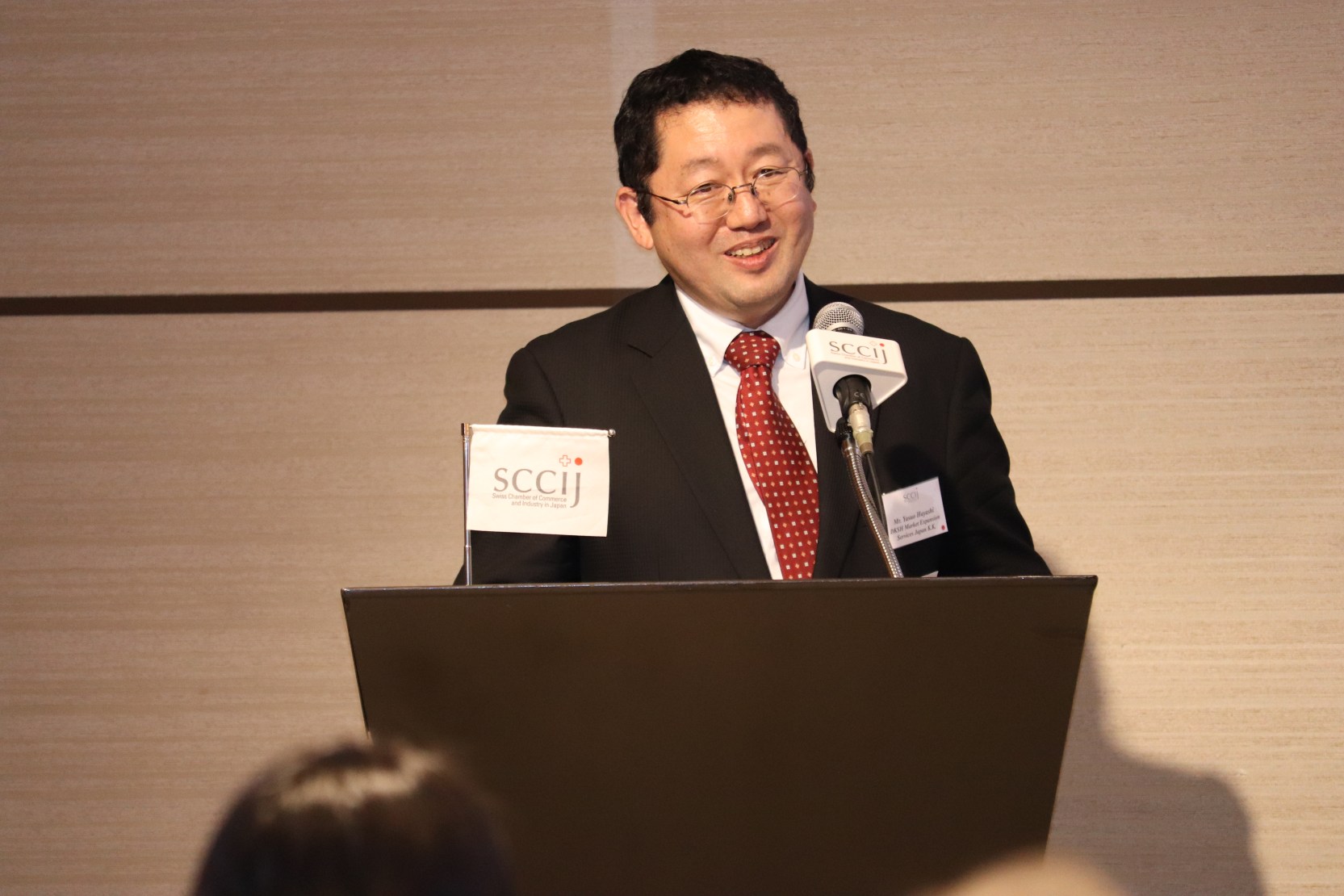
Mr. Hayashi, DKSH has also supported Japan’s ‘Third Wave Coffee Movement.’ How does this reflect your approach to market expansion?
Mr. Hayashi: Japan followed global coffee trends, but remained dominated by large-scale roasting and didn’t embrace the 3rd wave coffee trend until 2011 . We saw an opportunity to support small roasters and baristas by introducing technology from partners like Probat and Faema. Through events such as the Roku Latte Art Tournament, we connected craftsmanship, community, and innovation. This is what DKSH does best, build bridges between global know-how and Japan’s passion for quality.
You also spoke about sustainability – specifically the Desto Cup project. How do you see the role of DKSH in driving this kind of change?”
Mr. Hayashi:
Sustainability is a shared responsibility. The Desto Cup is a recyclable, paper-based cup already well adopted in Europe, but Japan is still in the early stages.
We don’t push for sudden change; we educate, collaborate, and align with social and regulatory developments. Transformation only lasts when it grows from understanding, not pressure.

What does ‘bidirectional value’ mean in DKSH’s philosophy?
Mr. Asada: Bidirectional value means creating impact on both ends. A perfect example is our export of Kochi yuzu to Europe. It’s not just about selling a product – it’s about revitalizing local Japanese regions while bringing authentic flavors to European consumers.
For five years, DKSH employees have volunteered in Kochi to support the yuzu harvest, helping ease labor shortages and strengthen partnerships with local communities. It’s a win-win: business growth with cultural and social impact.
After 160 years, what remains the most important lesson from working in Japan?
Mr. Hayashi: In Japan, pushback doesn’t mean “no.” It means “listen more.” We’ve learned that understanding hesitation is the key to trust. Every obstacle can guide you to refine your value. That mindset – respecting culture while striving for progress – is what keeps DKSH moving forward.
How do you understand “A Legacy of Transformation”?
Mr. Asada: For 160 years, DKSH has embodied the Swiss spirit of reliability and innovation while deeply engaging with Japan’s culture of precision and respect. Our story is a reminder that long-term success is not built on change alone, but on trust, listening, and lasting partnership.