A career spanning trading in Tokyo, banking in London, boardrooms in Brazil, automotive factories, housing materials and fixtures, and even high-end musical instruments, has been driven by recurring themes for François-Xavier Lienhart. Alongside the need for purpose and the curiosity to keep learning, has been a deep connection with Japan.

Born and raised in Alsace, France his early life was shaped by proximity to Switzerland and a cross-cultural awareness that would help define his journey. “Even in my youth, we were going to Basel on weekends. When I later moved to Paris as a student, it took more than five hours to get there. Basel was only an hour away.”
Boom Times, Bath Time
As Lienhart was studying the ways of business and economics in the 1980s, Japanese industry was booming and companies like Sony and Ricoh had invested heavily in Alsace. “There was even a Japanese school for expatriate children.”
Lienhart chose to study Japanese, alongside English and German, spending a transformative 1987 at Osaka University. “It was a unique opportunity to go deep into Japanese economics and culture. Japan was at its peak. The impression was that nothing could stop it.”
Part of his course was an internship at Sumitomo Bank. Lienhart moved into a company dorm in Tokyo when foreigners were still a relatively rare sight. He remembers opening the door to the large, shared bath on his first evening to see about 20 young men washing themselves on small stools. “Everyone stared at me, then almost in unison looked one metre down. That was my ‘onsen vaccination.’ I was never again uncomfortable bathing with colleagues or clients.”
Bubble-era Japan Life was simultaneously enriching and impoverishing. “Money disappeared very quickly after the 15th of the month. I gave French lessons just to afford a dictionary. But not having money meant I spent a lot of time studying.”
Global Currents

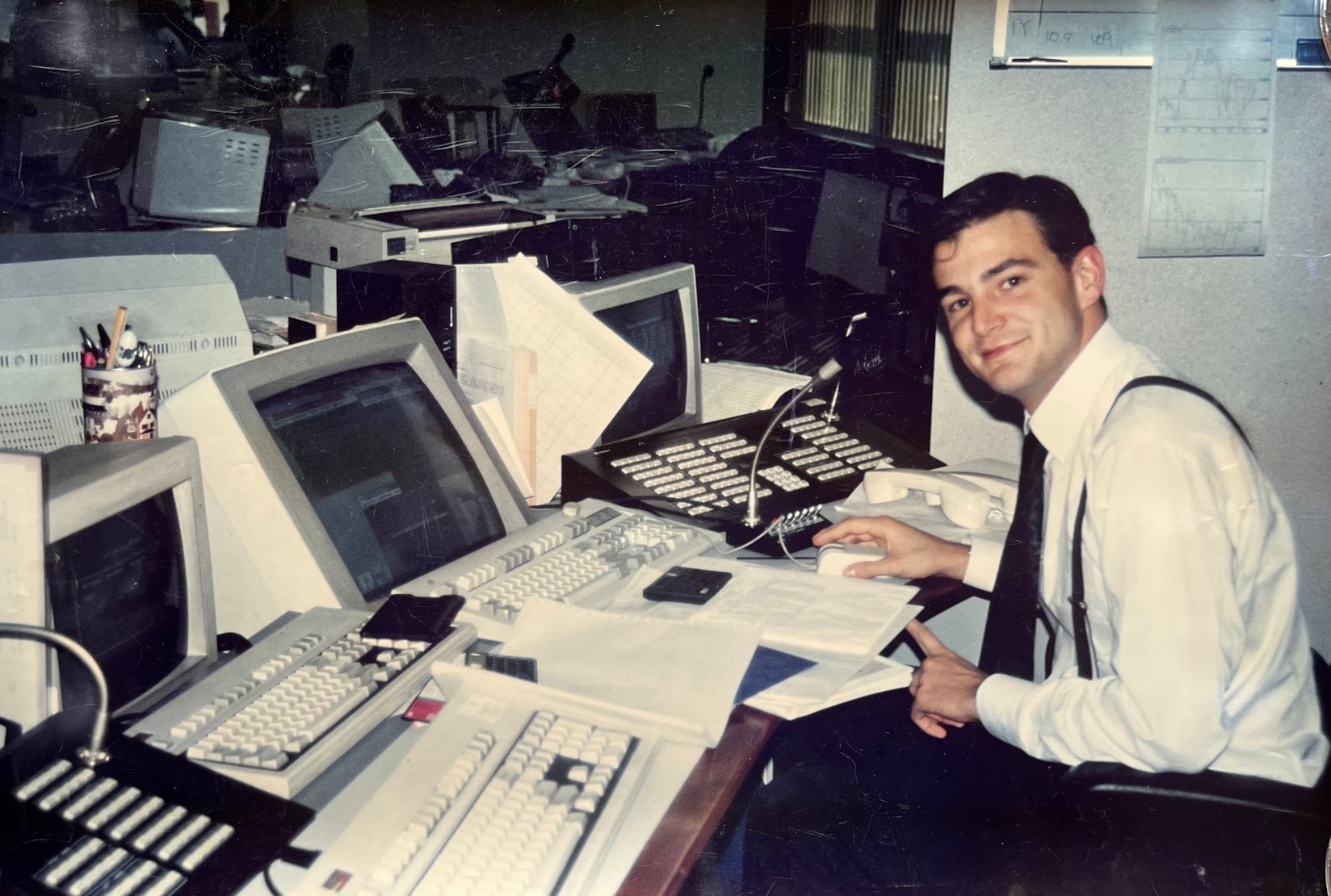
Graduation was followed by a stint back in Tokyo, this time trading forex options with Crédit Agricole (then Banque Indosuez), then a couple of years with Morgan Stanley in London. Returning to Paris in 1991, Lienhart joined Sanofi as a financial analyst, embarking on a degree in Japanese language and culture the following year while working at the pharma giant. “It was a big investment. I was waking up at 5a.m. to study kanji.”
In 1995 he moved to construction materials specialist Saint-Gobain, his corporate home for the next two decades. Paris was followed by a posting to Sao Paolo as CFO of its South American glass division. There he picked up Portuguese and inevitably felt Japan’s presence in the form of its large diaspora.
He was soon back in Japan, this time as Asia-Pacific CFO, before being appointed CEO of newly-acquired Mag Isover, a maker of glass wool insulation, in 2008. Taking over as country head for the Saint-Gobain Group in 2010, he faced a major challenge the following year. “When the 2011 earthquake happened, I had to manage the crisis at our plants in Ibaraki. That experience created a very strong bond with my team, further deepened his ties with Japan.”
By 2015, when Saint-Gobain suggested a return to France, Lienhart knew he wouldn’t go. “It was probably unconscious at the time. But looking back, I think I felt I would lose a part of myself if I left.”
Going Deeper
A pivot into more consumer-facing sectors saw him running the kitchen business at Japanese home products conglomerate Lixil. “It was about going from raw materials to interior spaces, from structure to lifestyle, going downstream.”
Deciding to strike out on his own as a consultant in 2016 led to an unexpected offer from one of his first clients to head up their Japan operation. Buffet Crampon, a French manufacturer of wind instruments, facilitated new insights. “It was niche, but fascinating. From Hokkaido to Kyushu, I met passionate teachers and musicians. It was like going deeper into Japanese society, into the soul, even.”
Putting it All to Work
The subsequent role heading up ARaymond Japan in the automotive sector coincided with COVID and the semiconductor crisis. As strategy shifted, Lienhart embraced a long-gestating ambition: to become an executive coach. He trained at INSEAD, describing the program as “a life-changer.”
He now works with individuals and teams, leveraging the depth of his international and multisector leadership experience. “I’ve worked in a big French listed multinational, a big Japanese one, with private equity, and a mid-sized family business. So, I can understand many situations. I’m not telling people what to do, but I get what they’re dealing with.”
His reach now includes coaching Kuala Lumpur’s Asia School of Business MBA students and contributing to INSEAD’s cross-cultural programs, such as Erin Meyer’s “Culture Map” methodology. “It’s exciting to interact with such diverse perspectives. It opens up the scope of everything.”
He’s also channelling decades of experience into serving as an outside director at Japanese auto parts maker Ichikoh. “It’s a way to stay connected to the real life of business. And it helps me coach CEOs better because I know how it feels to be on the board looking at them.”
Lienhart still makes time for his great passion: reading, particularly Japanese literature. “I love classics like Tanizaki and Natsume Soseki, but one of my favorites is Hyōheki (ice wall) by Inoue Yasushi. It’s a story of two mountaineers, but really about friendship.” He had his own accident in the mountains this winter on a ski trip, though in the less dramatic setting of a hotel car park, slipping on ice formed by frozen onsen water.
Through the decades, his underlying motivations remained largely consistent: “Feeling useful and learning. These two things are more important to me than money. And I love the freedom I have now to choose what I want to learn and who I want to work with.”
Text: Gavin Blair for SCCIJ.